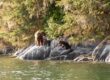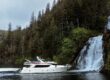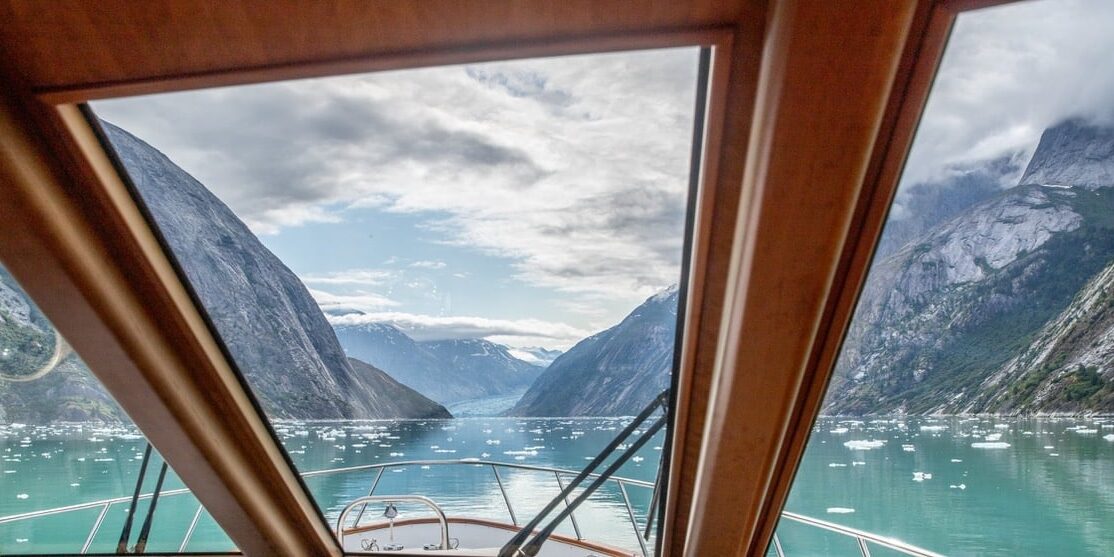
On the evening of August 8, 2025, we were anchored near Sawyer Island, beside a waterfall off the main channel of Tracy Arm, when we spotted a mountain goat on the cliff somewhere between seventy-five and a hundred feet up, working his way down and grazing on the vegetation as he went.
Some stretches of that rock were steep enough that he would stumble a little and then jump, and we were all amazed at how goats cling to sheer cliffside in a way that doesn’t look possible from the deck of a boat.
Then he started working his way over to the waterfall, and our guests decided they were watching parkour as he crossed it and jogged down it to the flat ground below. Nobody could look away, as we had a front-row seat.
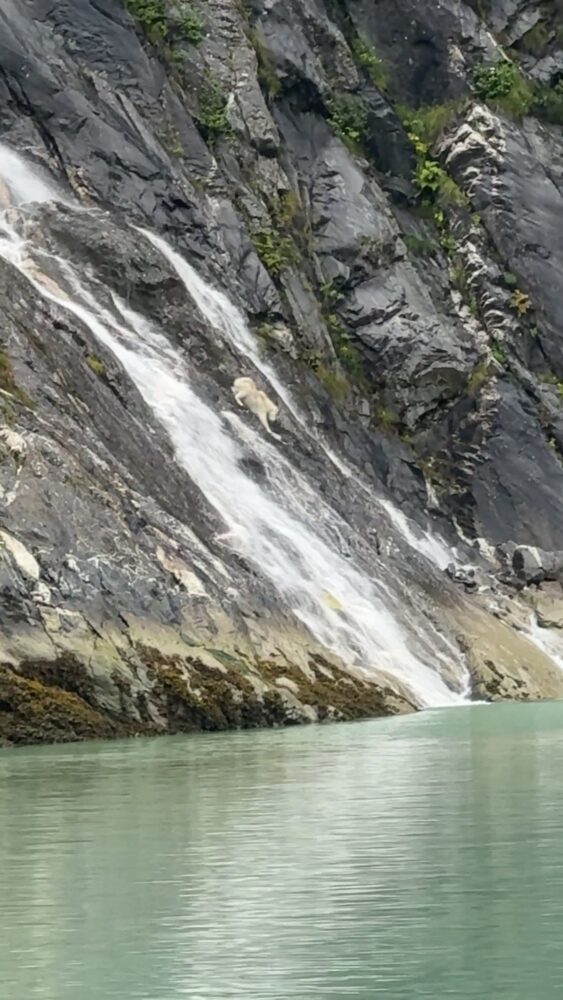
The goat crossing the waterfall near Sawyer Island, August 8, 2025. Photo: Alisa Jestel.
The next morning we went to the end of the arm we were in to see Sawyer Glacier, and then we ventured back past Sawyer Island toward South Sawyer until the ice stopped us, because there was too much of it in the water to reach the face. In glacier country the ice decides a lot of the day, so we turned around, made our way out of the arm and anchored for the night in Taku Harbor.
The next morning, August 10, we heard from friends, captains Jeffrey and Christine Smith, who were aboard their vessel, the David B, up in Endicott Arm. They had noticed a surge in the water level after something happened and reached out to a friend of theirs, a seismologist in Bellingham, so they were among the first to say that some kind of event was underway, and for a while nobody knew what it was until more pieces came together.
At 5:26 that morning, according to the USGS, a mountainside above South Sawyer Glacier let go, and the wave it sent across the fjord ran up the opposite wall about 1,580 feet, which scientists now rank among the tallest ever measured. We had been in that fjord the day before, about five miles from where it happened.
We didn’t talk about it much at the time because I didn’t want anyone dreaming of an Alaska trip to be frightened, and I didn’t want to turn timing into drama, but a little time has gone by and it feels right to tell it plainly. It’s also a good picture of why an itinerary here stays loose, since ice, tides and weather all get a vote and we plan the week around what they say.
That October, Jim and I took geologist Bretwood Higman of Ground Truth Alaska and Patrick Lynett, a tsunami researcher from USC, back up to the site along with their team, and while they led the research, Dauntless provided the transportation and lodging. A clear waterline ran the length of the fjord with the vegetation stripped away below it, and some bays took far more damage than others, wherever the wave broke ashore. Some places looked untouched and others were devastated.
On the way back up the arm we saw the waterfall where the goat had crossed, and the grazing ground around it had been cleared. We still talk about that goat, picking his way down the rock and jogging across the falls, and we hope he had enough warning to get to higher ground. None of us can say whether he did, but we know he spent that evening grazing his way down a slope that would be bare by the time we came back.
If you’re curious what glacier country is like from the deck of M/Y Dauntless, send me a note and I’ll tell you.
Quick answers
Do you always reach the glacier?
No. Ice can block the way, as it did on the way to South Sawyer that day, so we keep the itinerary flexible.
Were you there when the landslide happened?
No. We had left the arm the afternoon before, anchored in Taku Harbor, and heard from friends the next morning.
Did you go back?
Yes. That October, Dauntless carried geologist Bretwood Higman, USC tsunami researcher Patrick Lynett and their team to the site, and gave them a place to stay while they surveyed.
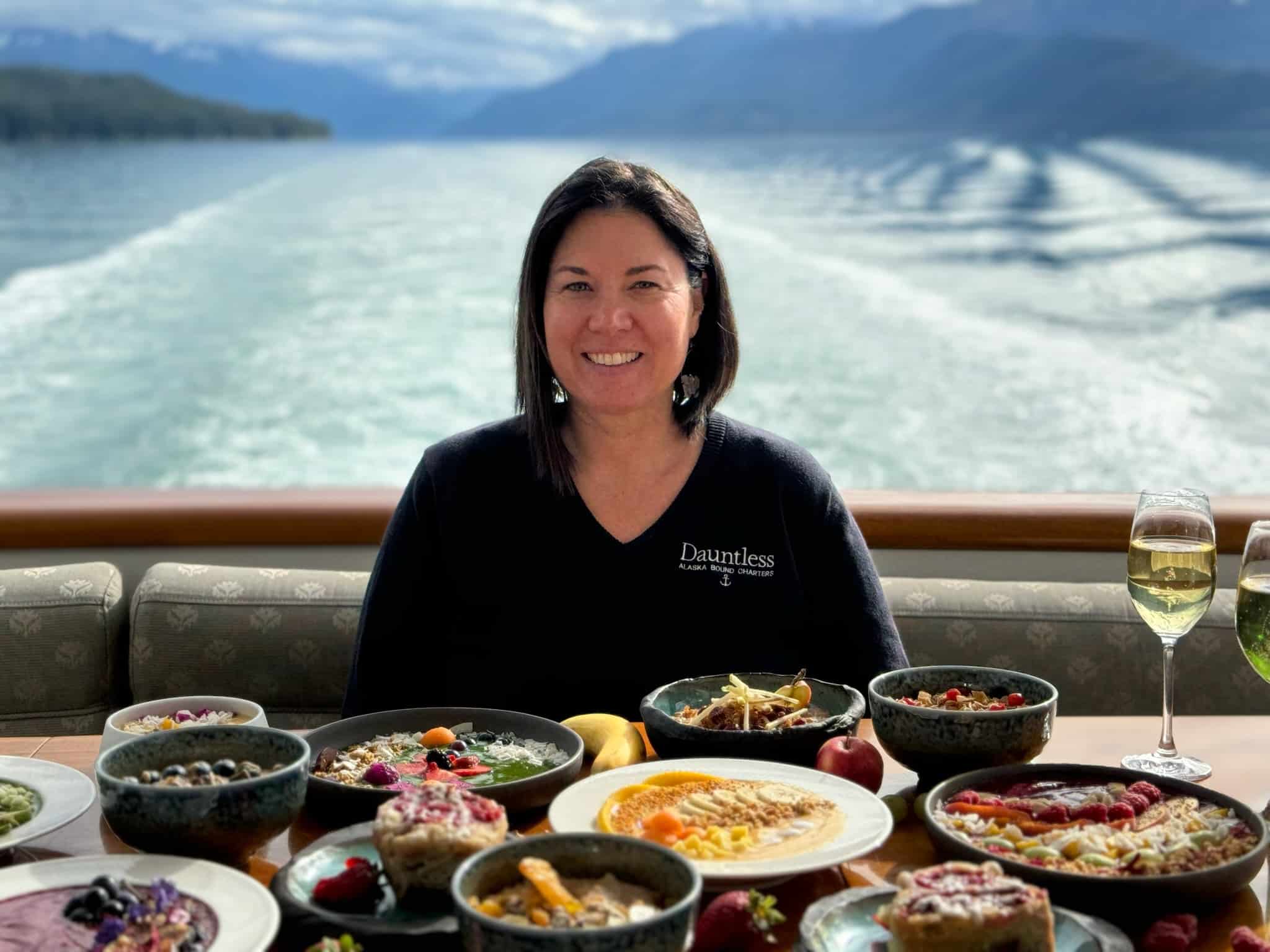
Chef Alisa Jestel is the chef and co-owner of M/Y Dauntless, with over 20 years of culinary experience. She and Captain Jim, a lifelong Alaskan, run Alaska Bound Charters from Petersburg, Alaska.