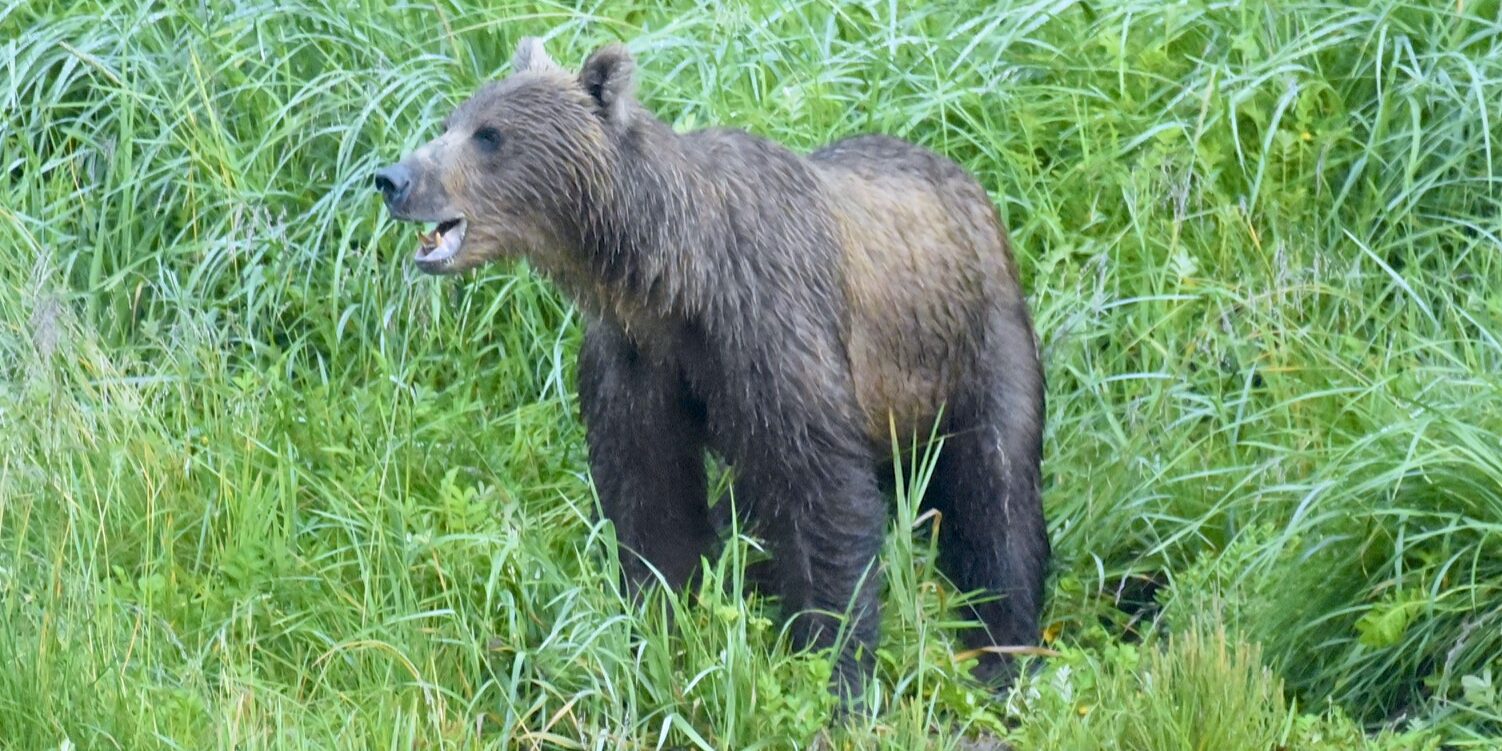
Jim spots wildlife before the rest of us know there’s anything to look at. A splash that seems a little different from the waves around it might be a porpoise. A blow far off on the horizon means there’s a whale out there. And a dark patch along the shoreline that looks like a rock can turn out to be a black bear.
After a lifetime on Alaska’s waters, he’s pretty good at noticing the small things the rest of us would miss.
One question guests often ask is which month is best for wildlife. I always have a hard time choosing because I love them all. Each month brings something different, and I usually help people decide based on what they most want to see and do.
Here’s what we tend to see throughout the charter season, cruising Southeast Alaska from our home port of Petersburg.
May: Quiet Waters and Busy Shorelines
May is one of the quieter months on the water, mostly because the summer visitor season hasn’t really started.
The wildlife is already busy, though. Bears are down along the beaches feeding on sedge grass and digging for shellfish. Humpback whales are feeding, and we regularly see eagles and sea lions.
Fawns start showing up in mid to late April, so early May brings fawn sightings too, which are always a treat to see.
It’s a lovely time to be out exploring, and we share the water with fewer boats.
June: Long Days and Glacier Wildlife
June is a favorite month for many locals, and I can understand why. The days keep getting longer, we can have some wonderful stretches of weather, and it’s still relatively quiet on the water.
Bears often move farther into the hills during mating season, while humpbacks and eagles remain abundant.
Up near the tidewater glaciers, harbor seals have their pups on the floating ice. Watching them resting on icebergs is one of the pleasures of a glacier day.
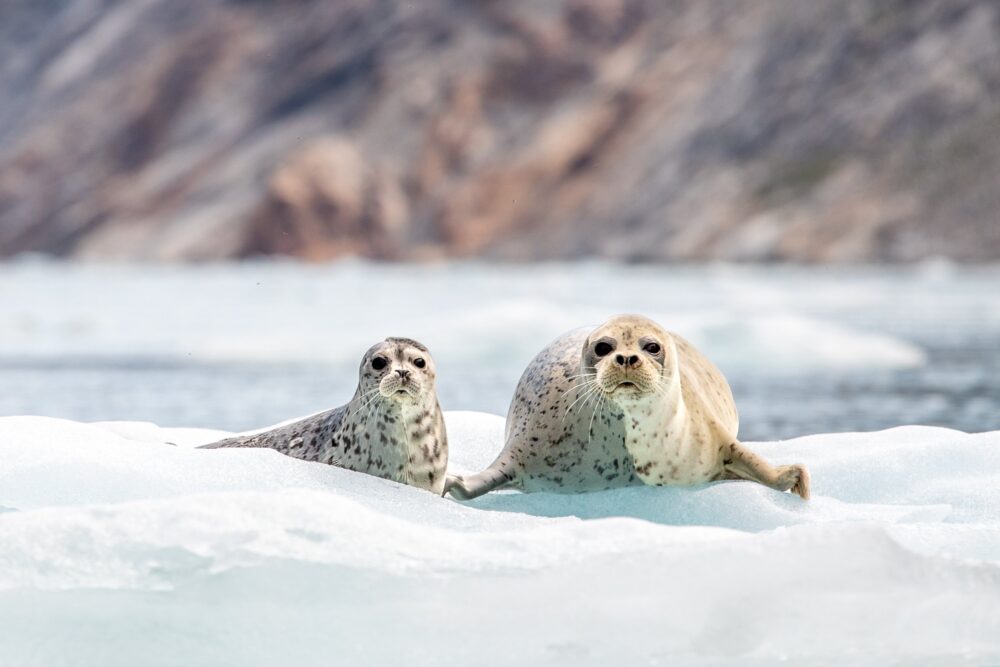
Harbor seals resting on glacier ice.
Mountain goats are another animal we look for in the glacier arms. They’re much harder to spot, usually staying high on the steep slopes. We see them on a little less than half of our trips, though we know the areas to look. Their coats are an off-white color with a creamy yellow tint, so what looks like a patch of snow can sometimes turn out to be a goat.
During our first season, one wandered down to about fifteen or twenty feet above the waterline. We were on the bow, almost looking it in the eye, watching it graze along the cliff face. It’s something to see how easily they move across terrain that steep.
July: The Salmon Begin to Arrive
By July, the summer season is picking up, and there’s more boat traffic on the water.
The salmon begin making their way into the creeks, and with them come the bears, returning toward the shoreline to feed.
Humpbacks are still feeding throughout the area, while eagles and sea lions take advantage of the growing abundance of food.
It’s an active time along the coastline, and there’s always something to watch.
August: The Height of the Feeding Season
The first two or three weeks of August are full swing in Southeast Alaska.
Salmon are running strong, bears are feeding along the creeks, and eagles and sea lions are taking full advantage of the food supply. There’s activity everywhere you look.
Toward the end of the month, the pace begins to change. The days are getting noticeably shorter, some visiting boats start heading south, and the waterways gradually become quieter.
Humpback whales also begin gathering in Frederick Sound, feeding heavily as they prepare for the months ahead. Many will eventually migrate toward Hawaii.
September: Whales, Coho and Quieter Waters
September is particularly good for humpback watching in Frederick Sound. The whales are feeding, coho salmon are running strong, and bears are still active along the creeks.
For guests interested in salmon fishing, September can be a good time to explore river fishing opportunities, depending on conditions and regulations.
Many visiting boats have headed south by then, so the waterways are becoming quiet again.
The days are noticeably shorter, and the weather can change quickly. We plan accordingly, and a little flexibility goes a long way.
The Wildlife That Doesn’t Follow a Calendar
Of course, not everything we see fits neatly into a particular month.
Dall’s porpoise and orcas can pop up anywhere at any point in the season, and orcas are in the area year-round. Sea otters are a different story, since we know where to find them. Mountain goats are elusive too, but we know the areas to look.
We know several Steller sea lion haulouts and often visit a couple during the week. I can never tell whether I hear them or smell them first. It depends on which way the wind is blowing.
There might be thirty to fifty sea lions piled onto a rock formation, squawking and wrestling like a noisy daycare. They’re entertaining enough to watch for quite a while.
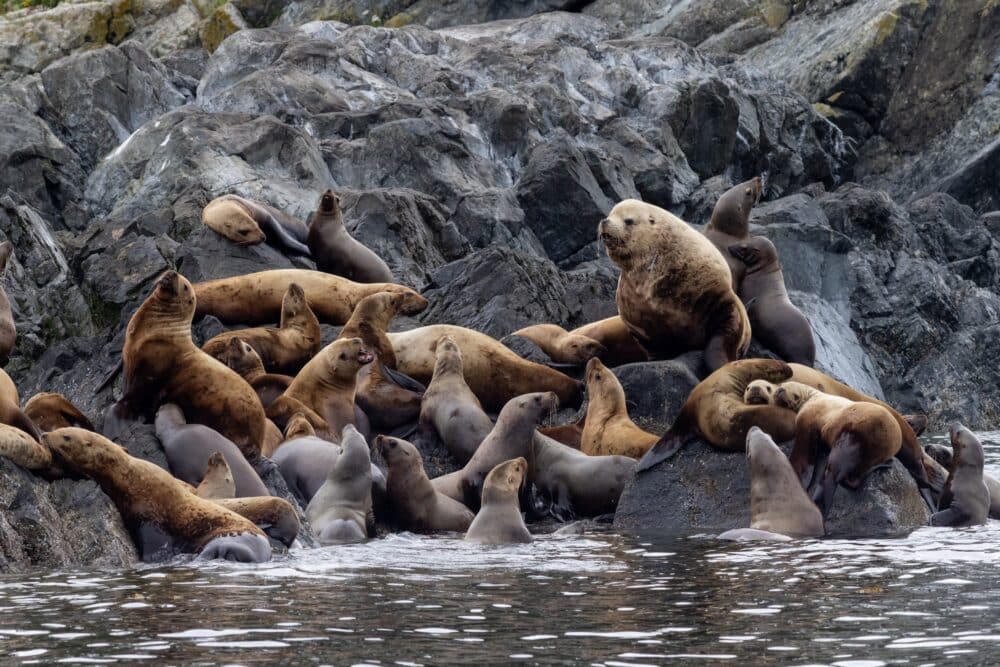
A Steller sea lion haulout.
Dall’s porpoises are another favorite. Sometimes a couple will appear near the bow, darting through the water and riding the wake. They move so quickly that it’s hard to know where to look next. Jim has learned that a small adjustment in speed can make a difference in how long they stay nearby.
Sea otters are a treat, too, especially when we see a mother carrying her pup on her chest.
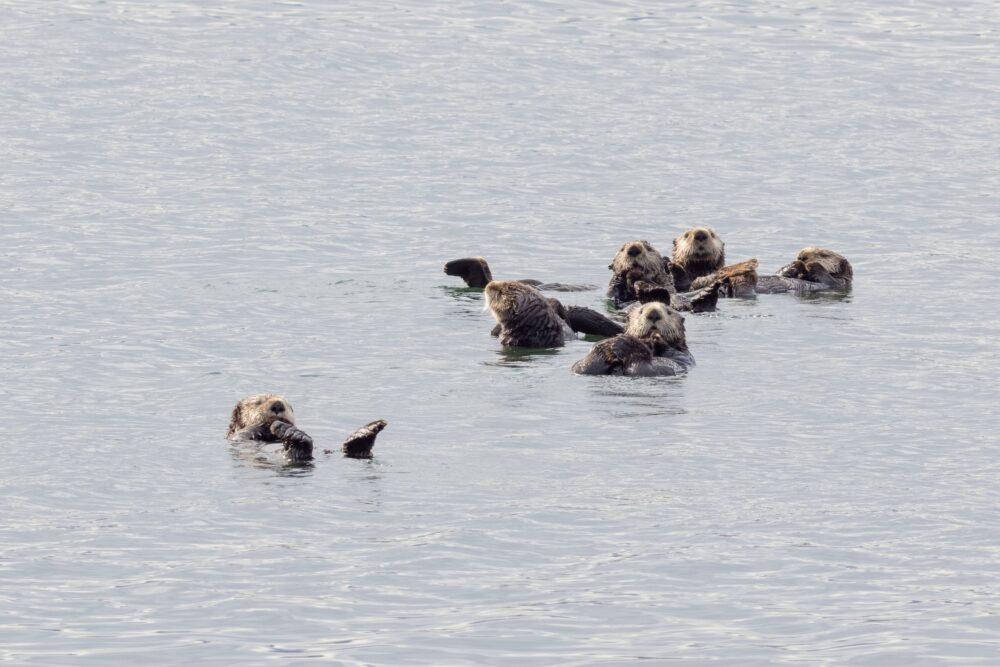
Sea otters floating together.
Whatever we’re watching, we stay at least 100 yards from marine mammals. We try not to affect their lives at all, only to observe and appreciate them from a distance.
Moose and wolves are much rarer sightings from the water, which makes an encounter particularly memorable.
One evening, we had just sat down to dinner at anchor when a large moose swam past Dauntless and across the bay. Everyone scrambled for cameras. I’m not sure we got any particularly good pictures, but we certainly remember it.
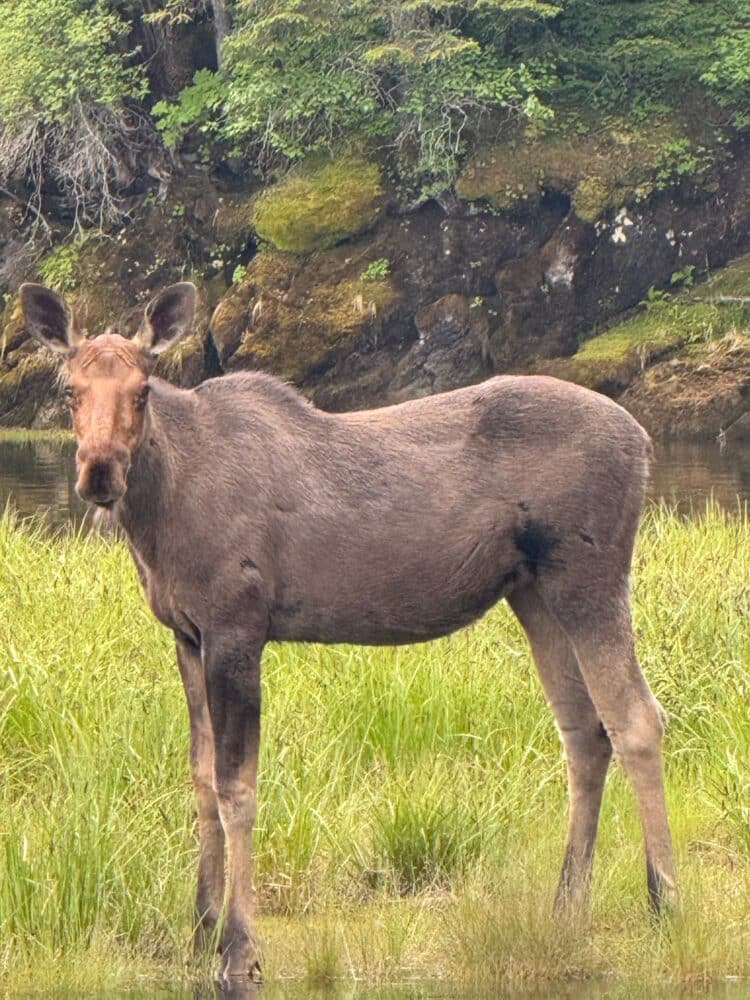
A moose along the shoreline.
That’s one of the things I love about Alaska. Even after all these years, there’s always the possibility of seeing something we didn’t expect.
Which Month Is Right for You?
I genuinely love every month of our charter season, and I wouldn’t tell everyone to come at the same time.
If you’re especially interested in bears feeding along salmon streams, we might talk about July, August or September. If you love long daylight hours and exploring glacier country, June has plenty to offer. And if quieter waterways and humpbacks in Frederick Sound appeal to you, September is worth considering.
Jim plans our days around the weather, tides, wildlife activity and what our guests enjoy. We can plan with particular interests in mind, but the animals always have their own schedules.
You can see which charter weeks are available and where we cruise.
If there’s an animal you’re especially hoping to see, send me a note. I’m always happy to help you decide when to visit.
Quick Answers
Which month is best for wildlife in Southeast Alaska?
Every month offers something different. May brings quieter waters and shoreline feeding, June offers long days and glacier wildlife, July and August bring salmon and bears, and September is especially appealing for humpbacks in Frederick Sound.
When are bears most active near the shoreline?
We often see bears along the beaches in spring. As salmon return to the creeks in July, bears begin gathering around feeding areas, with activity continuing through August and September.
Can guests see orcas on a Southeast Alaska yacht charter?
Yes, although sightings are unpredictable. Orcas occur in the area year-round, but they don’t necessarily return to the same locations on a schedule. We keep our eyes open, but never promise a sighting.

Chef Alisa Jestel is the chef and co-owner of M/Y Dauntless, with over 20 years of culinary experience. She and Captain Jim, a lifelong Alaskan, run Alaska Bound Charters from Petersburg, Alaska.